
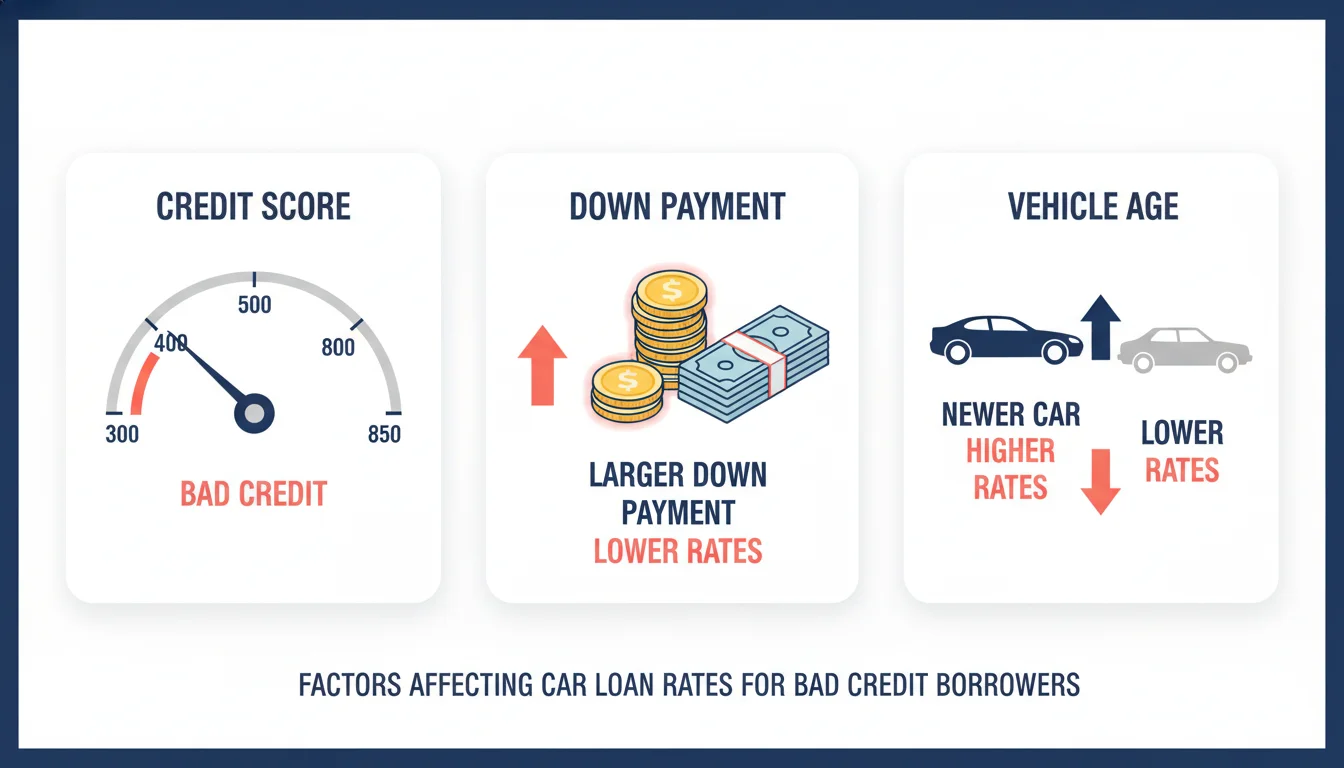
If you have bad credit and you're shopping for a car, you've probably run into a frustrating pattern: dealers who say they can help everyone, then quote terms that feel like a trap. Not every dealership that advertises subprime financing is working in your best interest.
The good news is that legitimate subprime auto dealers and lenders do exist—and knowing how to tell them apart from the predatory ones can save you thousands of dollars and a lot of stress.
This guide explains what subprime auto financing actually is, what makes a lender or dealer genuinely helpful, and the specific red flags that tell you to walk away.
What "Subprime" Actually Means
Subprime refers to lending to borrowers with credit scores typically below 620. It's not a dirty word—it simply describes a segment of the market where lenders accept more risk in exchange for higher interest rates.
Legitimate subprime lenders evaluate your full financial picture: income, employment stability, down payment, and overall debt load. They set rates based on assessed risk, and they report your payments to credit bureaus so you can rebuild your score over time.
Predatory lenders, on the other hand, exploit the fact that you have limited options. They charge the highest rates possible, bury fees in paperwork, and often structure deals that set you up to fail.
The Subprime Lending Landscape
There are several types of lenders that serve credit-challenged buyers. Understanding the difference helps you evaluate what you're being offered.
Specialty Finance Companies
These are dedicated lenders—companies like CAC, DriveTime's financing arm, or regional finance companies—that specifically work with subprime borrowers. They have structured underwriting criteria and report to credit bureaus. These are typically the most legitimate option for bad credit auto loans.
Credit Unions
Some credit unions offer programs for members with damaged credit, often at rates better than specialty finance companies. If you're a member of a credit union, it's worth asking about their bad credit lending programs before looking elsewhere.
Captive Finance Arms
Major manufacturers like Ford, GM, and Chrysler have their own finance divisions that sometimes offer programs for credit-challenged buyers. These are typically available at new car dealerships and tend to have more structure and oversight than independent lots.
Buy Here Pay Here Dealers
BHPH lots act as their own lender. They have the widest approval criteria but typically the highest rates, older vehicles, and—critically—most don't report your payments to credit bureaus. Learn more about how these compare to traditional subprime financing.
What a Good Subprime Dealer Looks Like
The best dealers for credit-challenged buyers share a few common traits. Here's what to look for:
They Work with Multiple Lenders
A dealer with relationships at five or ten specialty finance companies can shop your application across them, finding you the best available rate. A dealer who only works with one lender can only offer you one option—and they have no incentive to find you a better deal.
They're Transparent About Rates and Terms
Good dealers explain the APR, total loan cost, and monthly payment clearly before you sign anything. They don't bury fees or quote only the monthly payment without disclosing the interest rate and term length.
They Have Realistic Inventory
Subprime lenders often have restrictions on vehicle age and mileage. A good dealer understands this and shows you vehicles that will actually get financed—typically 5-10 year old vehicles with under 100,000 miles at reasonable prices.
They Explain the Credit-Building Process
A dealer who cares about your outcome will explain that their lenders report to all three credit bureaus, and that making on-time payments will improve your score over time. This matters because it's what separates a financing arrangement that helps you from one that just extracts money.
They Don't Push Unnecessary Add-Ons
GAP insurance, extended warranties, and credit insurance products get rolled into the loan, increasing what you owe and what you pay in interest. A good dealer explains these products and lets you decide—they don't pressure you into adding them to survive approval.
Red Flags That Signal a Predatory Dealer
These warning signs appear often at dealerships that prioritize extracting money over helping you succeed:
Yo-Yo Financing
You drive off the lot, then get a call a few days later saying financing "fell through" and you need to come back for worse terms. This is a manipulation tactic. In some states it's illegal. If this happens, you have the right to return the vehicle and get your down payment back.
Quoting Only Monthly Payment
"What can you afford per month?" is how dealers avoid discussing the total cost of a loan. A 72-month loan at 24% APR can make almost any car seem affordable on paper while costing you a fortune in interest. Always ask for the full loan cost and the APR.
Insisting You Buy the Same Day
High-pressure urgency tactics are designed to prevent you from reading paperwork carefully or comparison shopping. A legitimate dealer doesn't need you to decide in an hour.
Not Confirming Whether They Report to Credit Bureaus
Ask directly: "Do your lenders report payments to Experian, Equifax, and TransUnion?" If the dealer hedges or changes the subject, assume the answer is no. Don't waste years of payments on financing that doesn't build your credit.
Selling Vehicles in Unusually Poor Condition
If a dealer's inventory is exclusively high-mileage vehicles over 150,000 miles or older than 10 years, ask yourself why. Quality subprime lenders won't finance vehicles in poor condition, which means you may be financing through a BHPH lot with limited protections.
Questions to Ask Before You Sign
Walk into any dealer with this list of questions. Their answers—and how willingly they answer—will tell you a lot:
- "What is the APR on this loan?"
- "What is the total amount I'll pay over the life of the loan?"
- "Do your lenders report to all three credit bureaus?"
- "Which lenders are you submitting my application to?"
- "Can I take the paperwork home to review before signing?"
- "What fees are included in this deal besides the vehicle price and interest?"
A good dealer answers all of these without frustration. A problematic dealer will dodge, minimize, or try to redirect you.
Getting Pre-Qualified Before You Shop
One of the best ways to protect yourself is to understand your approval range before you walk onto a lot. When you're pre-qualified through a service like Car Approval Pro, you go into the dealer with a realistic sense of what you can finance and at what general rate range.
This does two things for you. First, it prevents dealers from manipulating your expectations. Second, it signals to the dealer that you've done your homework—which tends to result in better treatment.
The Right Vehicle for Subprime Financing
Specialty subprime lenders have preferences that increase your approval odds. Here's what tends to work well:
- Age: Vehicles 3-8 years old hit the sweet spot—reliable, affordable, and financeable
- Mileage: Under 80,000-100,000 miles for most lenders
- Price: $8,000-$18,000 is the most common range for subprime approvals
- Brand: Honda, Toyota, Ford, Chevrolet, and Hyundai are common choices because of their reliability and resale value
What to Do After You Get Approved
Approval is the beginning, not the end. The single most important thing you can do after getting financed is set up automatic payments the same day you drive off the lot. One missed payment can undo months of credit progress.
After 12 months of on-time payments, revisit your credit score and look into refinancing. Many borrowers with subprime loans can refinance at a meaningfully lower rate after demonstrating a year of reliable payments. That rate drop translates directly to money saved each month for the rest of the loan.
Find Financing That Works for You
You deserve a dealer who treats your situation with respect and connects you with lenders who report to credit bureaus, offer fair terms, and set you up to succeed.
Start with a free application at Car Approval Pro. We match you with vetted subprime lenders who work with your specific credit profile—not dealers looking to make a quick deal at your expense.
The right financing helps you get from point A to point B today—and gets you into better financial shape for every loan that comes after.